
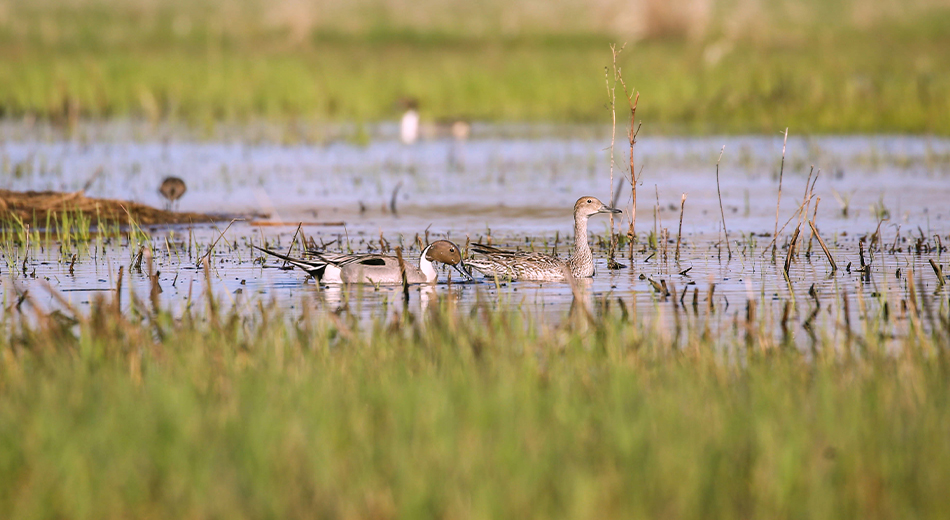
Delta Waterfowl Outlines Recent Work on Behalf of Wetlands and Duck Hunters
Dear Delta Members and Supporters,
I wanted to take a moment to share with you the work Delta has undertaken related to U.S. Fish and Wildlife Service easements over the past two weeks. We appreciate that this issue has brought out the passion of duck hunters, and I want to share some insights and outline the work Delta has done on your behalf.
Background
On July 24, USFWS published a Request for Information regarding the calculation of drainage tile setbacks on wetland easements. It is important to note that USFWS is seeking public input and is not suggesting a policy change at this time. While this is a process without suggested action, Delta and our colleagues believe it is prudent to comment and monitor any issues related to USFWS easements because of the important role they play as waterfowl breeding habitat.
Wetland easements are assets of the National Wildlife Refuge System. Their primary function is to protect the small, shallow wetlands that are the most critical to breeding ducks and also easiest to drain. Estimates suggest that USFWS easements support 1.7 million breeding pairs of ducks that produce 700,000 young ducks annually. These easements, secured using duck stamp dollars from waterfowl hunters, provide the very foundation for duck populations in the U.S. prairies.
It is important to note that USFWS easements are referred to as “minimally restrictive,” which means they do not restrict agricultural production, but simply stipulate that owners cannot drain, burn, or fill in wetlands under easement. The USFWS makes clear that any drainage cannot alter wetlands directly via ditching, or indirectly by drain tile.
The issue being raised is how USFWS determines setbacks for drain tiling. Utilizing well established hydrological (ground and surface water) models, these setback distances are calculated by factoring in the soil type, topography, and wetland characteristics to determine an appropriate distance that will preserve the wetland under easement. Specifically, the USFWS has requested feedback on a 2024 rule by which landowners could seek guidance on drain tile setbacks.
Advocacy Today
Delta’s work commenced immediately upon learning of the RFI, and the issue has been the top priority and focus for our policy team for the past two weeks. Delta immediately reached out to partners, USFWS leadership, decision makers within the Department of Interior, and members of Congress to make sure all understood the importance of the easement program and need for duck hunters to have a voice in any decisions. I am also proud to note that this issue has provided a clear example of cross-organizational collaboration, partnership, and flat out getting to work. These types of moments of uncertainty bring out the very best of all of us.
During the RFI, Delta has taken major steps to provide USFWS with our input about the importance of USFWS wetland easements to breeding ducks, and the close linkage between duck hunters and easements.
1. We sent a letter to Interior Secretary Doug Burgum expressing the importance of the easement program and registering our concern about any action that weakens easement protection. Included with Delta Waterfowl on the letter were John Childs, a Delta Board member, and the CEOs of Ducks Unlimited, California Waterfowl Association, and the South Carolina Waterfowl Association. Our goal was to show our organization, staff, and the leading voices in waterfowl conservation is concerned about the future of wetland easements that you and I have paid for through the purchase of our duck stamps, private philanthropy, NAWCA, and other means of conservation funding. This partner letter was referenced in an article in Outdoor Life on Aug. 4.
2. Delta staff worked with our partners in the American Wildlife Conservation Partnership to craft a letter expressing broad concern across the conservation and hunting community about changes to this critical program. AWCP is the collective of leading hunting and conservation organizations from all over the country that works together on key policy issues. John Devney, Delta’s chief policy officer, serves as the immediate past chair of the AWCP and member of the Steering Committee. He has been instrumental in drafting this letter and garnering support from our colleagues. Our goal is to show that this issue is not solely an issue where duck hunters have concerns, and it impacts the entire hunting and conservation community. In all, 31 of our friends and conservation partners representing millions of hunters and conservationists signed onto the letter, providing a clear signal to USFWS of unified support for the easement program and heightened concern about any action that weakens protections for wetlands.
3. To illustrate the far-reaching support from our chapter leaders across the United States, Cyrus Baird, Delta’s vice president of government affairs, drafted a sign-on letter that was circulated to our chapter network. This letter served a unique purpose. With more than 220 chapters signing on from 44 states, our goal was to provide a unified voice from a diverse group of duck hunters supporting wetland easements. From Pennsylvania to California and from Wisconsin to Texas, our chapter leaders stepped up and made their voices heard. This is the power of the Delta chapter model, and we could not be prouder to amplify the voice of our incredible chapters.
4. In collaboration with the Congressional Sportsmen's Foundation and DU, Jeff Wardlaw, Delta's senior manager of government affairs for the Mississippi and Central flyways, activated a letter from the Executive Council of the National Assembly of Sportsmen's Caucuses, a body of state legislators focused on hunting, angling and conservation. Wardlaw is the sitting president of the NASC Executive Committee.
5. Finally, Delta submitted our official comments on the record which points out the legacy investment duck hunters have made in USFWS easements and the important role they play in preserving critical waterfowl breeding habitat.
Throughout discussions, Delta has specifically referenced that the easement program is well served by working collaboratively with individual landowners and the agricultural community as a whole. We also have noted specific actions and policy USFWS has enacted to increase clarity and resolve disputes while retaining the habitat value of easements.
From the moment USFWS requested information, Delta has gone to work, both for the benefit of breeding duck habitat and you, our members and duck hunters at large. An incredible amount of work has gone into informing policy makers and coalescing around two simple ideas: the importance of the easement program to breeding ducks and the inseparable connection between duck hunters and these easements.
Throughout the past two weeks, we have been laser focused on providing information that USFWS needs to complete the review.
Looking Ahead
We will continue to monitor this issue, as we have for decades, making sure these easements continue to serve the generations of duck hunters who invested to ensure the wetlands in the U.S. prairie pothole region remain conserved.
This is the latest in a long history of challenges involving the wetland easement program. Delta has successfully defended these protections before, and we will continue working to ensure they serve ducks, duck hunters and future generations.
Rest assured, Delta’s policy team is focused on strongly affirming the importance of the easement program as we do every day on so many issues impacting ducks and duck hunters.
We appreciate your continued confidence and the trust you place in us. It is an honor to serve you and serve as your voice on these important issues.
We’ll see you in the marsh,
Jason Tharpe
Chief Executive Officer
Delta Waterfowl