
WHF Dollars Expand Hunting Access
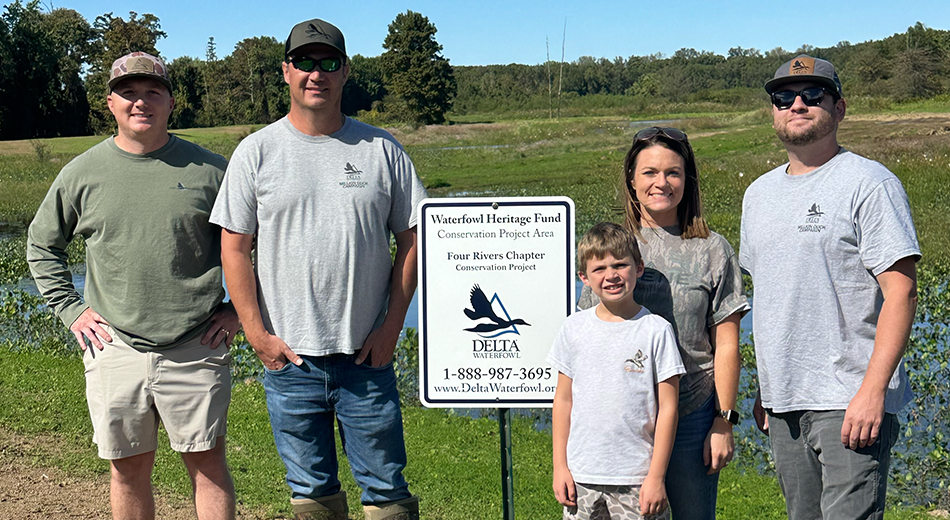
Kentucky Volunteers worked with waterfowl managers to repair levee and add infrastructure
The Four Rivers Chapter of Delta Waterfowl recently helped fund a rehabilitation project at Doug Travis Wildlife Management Area, a 4,200-acre property on the Mississippi River in western Kentucky.
"Our management philosophy on the WMA is that we provide a couple of rest areas that are interspersed with our hunting units," said Tim Kreher, a public lands biologist with the Kentucky Department of Fish and Wildlife Resources. "So, we try to encourage ducks to trade once they're on the WMA between the rest areas. We prioritize providing both row crop and moist soil vegetation in the hunting units."
At the WMA's Beaver Pond Rest Area, an old levee system was riddled with beaver dens and muskrat burrows, keeping it from holding water to full height and limiting the ability to flood timber and other habitat for waterfowl. Using Waterfowl Heritage Fund dollars — which lets chapters reinvest banquet proceeds in local conservation — the Four Rivers chapter covered the cost of equipment work to strip vegetation, excavate, repack rodent burrows, and grade the levee to a uniform height. Chapter funds also provided riprap to armor the new water control structure and spillway, deterring future burrowing and flood damage.
KDFWR supplied that structure, upgrading it from an 18" pipe to a 48" pipe. Together, the improvements are expected to nearly double the impoundment from 40 acres to 80, adding roosting habitat for dabbling ducks and divers.
"The regional and local managers for Doug Travis have been extremely welcoming and easy to work with," said Ryan Sturm, chapter chairman and Delta Waterfowl regional director. "Our goal is to help the area go from a Tier 2 to a Tier 1 WMA.
Our members hunt this whole area and want to invest in the resource more than we take from it."
The chapter and WMA staff plan to tackle more levees and water structures in need of repair, and build an ADA-accessible blind for disabled hunters.
"When we have somebody come in from outside, in the example of this project, even when it's a few thousand dollars, it lets us do those things that we as managers have been wanting to do for a long time, but we just didn't have the money to do it," said Kreher. "The partnerships that we're forming with organizations like Delta are going to have a bigger role in the future for us to continue the management that needs to be done (on the WMA)." — Christy Sweigart
This article originally ran in the Winter 2026 Issue of Delta Waterfowl magazine.