
Why Refuges Matter to All Hunters
When managed properly, public-land habitat supports waterfowl and improves hunting
By Christy Sweigart and Jonathan Olivier
Growing up hunting in southeast Arkansas meant Jake Maxwell had his pick of state wildlife management areas and federal refuge lands to trek his boots through. Thousands upon thousands of ducks and geese were held in the region by a variety of river systems, oxbow lakes, flooded timber, and agricultural fields.
Somewhere along the way, the mallards quietly thinned out, and the 36-year-old found himself driving across state lines in search of quality hunting opportunities.
“The whole area is just not as good as it used to be,” Maxwell said. The decline, in his view, took root in the 1990s and steadily worsened through the 2000s and 2010s. He pointed to changes in management, infrastructure modifications, and failures, and simply observed fewer ducks on the landscape. Unfortunately, his experience is not an outlier. Hunters across the country — on both public and private land — have reported a similar decline.
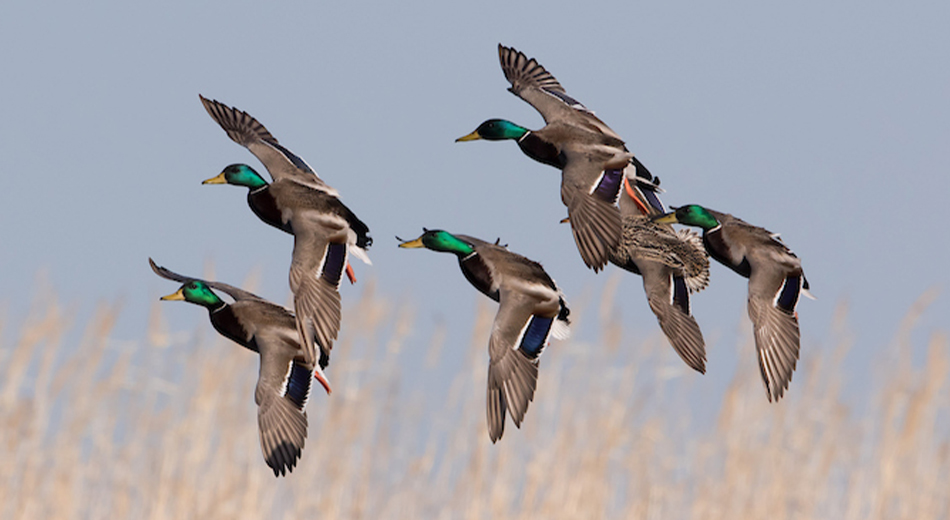
Once the crown jewel of waterfowl management in the U.S., the 573 refuges that make up the National Wildlife Refuge System encompass 95 million acres of land and 760 million marine acres. They provide waterfowl nesting habitat in the prairies and other key breeding grounds, foraging and loafing habitat along migration routes, and critical resources at wintering areas. They also host an estimated 2.6 million hunter days each year.
“We’re faced with a multi-faceted issue,” said Jason Tharpe, chief executive officer for Delta Waterfowl. “What we’ve seen over the past two decades is a slow, steady erosion of quality driven by budget cuts and deferred maintenance. When the habitat on a refuge declines, it stops attracting and holding birds, and those waterfowl move elsewhere to find habitats that meet their needs. It becomes a distribution problem that rears its head during hunting seasons. The resources that duck hunters put into this system need to be back to working for ducks and duck hunters.”
In answer, Delta Waterfowl launched Restoring Our Refuges — an advocacy campaign to work on securing public funding to revitalize the health and waterfowl value of federal refuges and state-owned Wildlife Management Areas throughout the United States.
But what makes this loss of quality habitat so urgent becomes clear only when we recognize the indispensable role refuges play in sustaining waterfowl across every stage of their annual cycle.
Migration & Wintering
When the freeze line develops across North America each fall, it pushes south with every cold front, locking wetlands in ice and snow. The annual weather cycle prompts millions of waterfowl to migrate south, where high-quality forage and open water can still be found.
“Migration is energetically expensive,” said Jay VonBank, Delta’s scientific director. “Ducks are looking for high-calorie foods, a lot of times with dense nutrients and vitamins to endure colder weather and expensive migration.”
Federal refuges, along with the expansive web of state-managed public lands, have historically provided ducks with that high-quality forage, as well as safety to loaf and roost, until the frost line descends and pushes them to wintering grounds in places such as the Gulf Coast, California’s Central Valley, or Chesapeake Bay. As winter sets in, they’re reliant on ample food sources and regionally abundant wetland habitat to conserve energy.
When public lands on the wintering grounds are functioning properly, they’re working for hunters in more than one way. Not only does your local public honey hole offer ducks food and hunting opportunities, but these protected habitats support duck distribution far beyond the refuge boundaries.
“Whether you're the person that's hoping to get drawn on one of these refuges or you're a guy that has a lease or owns a duck club up the road, having this network of lands creates this sort of broad distribution of ducks across the landscape,” said John Devney, Delta’s chief policy officer. “That well-managed refuge 10 miles away or a well-managed WMA is helping you. It’s keeping ducks in the neighborhood.”
When refuges are not properly maintained, ducks will look elsewhere.
“If birds have to travel farther between patches of good habitat, you increase the energy expenditure of those birds, and at some point, it becomes a net negative cost where it is no longer beneficial to stay,” VonBank said. “There's a point at which you can expend too much energy.”
Landscape changes and shifts in historic weather patterns have impacted duck distribution on the wintering grounds. Yazoo NWR in the Mississippi Delta historically served as a waterfowl sanctuary, benefiting hunters across the region.
“At times, we had over a million ducks on that refuge — and it’s not that big of a refuge,” said Tim Wilkins, former refuge manager at Yazoo.
At just shy of 13,000 acres, Yazoo was intensively managed for waterfowl for decades. Wilkins said what made Yazoo attractive to ducks were crops planted and then flooded in the winter, and the natural geography of the property is comprised of wetlands. The habitat at Yazoo has transformed since his tenure there ended.
“A few years after I retired, I went out during January and I counted two ducks on the refuge, Wilkins said.
Ducks remain reliant on well-managed habitat as winter fades and the freeze line retreats north, as they prepare for the journey to the breeding grounds. VonBank said the maze of refuges and public lands assists ducks on their way to breed in the prairie pothole region, Canadian parklands, and boreal forests.
“Refuges are used by waterfowl throughout the annual period from fall and winter through spring staging to breeding and nesting — whether that’s state land or a federal refuge,” he said.
Producing Ducks
The most critical time of year for duck populations occurs on the breeding grounds. In fact, some of the most vital habitat that impacts hunters in all four flyways can be found in the northern stretches of the continental U.S. and prairie Canada.
When the U.S. Congress amended the Federal Duck Stamp Act in 1958, Waterfowl Production Areas, coined the “jewels of the prairies,” were created to restore and preserve these important breeding and nesting grounds for migratory birds, particularly waterfowl. Individual parcels of wetland habitat were officially incorporated into the refuge system in 1966. Optimizing the use of Federal Duck Stamp dollars by protecting the landscape’s natural scattering of small wetlands supports the territorial spacing waterfowl need during breeding season and preserves the nutrient-rich habitat and resources waterfowl need to support a successful breeding attempt. And when ducks arrive at the breeding grounds, they’re immediately staking out the territory they’ll defend and putting those resources to work.
“When preparation for breeding comes, they're really targeting large quantities of invertebrates, trying to increase protein intake to build both their body and muscle back up after migration, but also produce eggs,” VonBank said. “Eggs are almost pure fat and protein. And that comes from invertebrates in wetland systems.”
Now, WPA’s, in addition to wetland and grassland easements, conserve more than 3 million acres of habitat, and 95% of them are in the PPR, which produces up to 70% of the ducks hunters shoot each year. And WPAs face similar challenges to those of larger refuges.
“Managing those breeding habitats means doing things like burning or discing to keep vegetation succession back and keep it growing productive grass, and keeping wetlands functional,” VonBank said. “The goal, at least for waterfowl, is to keep that habitat in lush grasses and productive wetlands, not grown up in woody vegetation or choked by invasive cattail for example, where it's most productive for nesting and brood rearing.”
But differences in landscape configuration present their own challenges. Whereas an NWR is typically a larger, contiguous area, the lands within WPAs are often many small parcels spread across a wide area spanning multiple counties and townships. It increases the level of management difficulty, especially when budget cuts are creating staffing shortages.
“If you lose that management, you don't have that succession and those lands become satiated in terms of productivity,” VonBank said. “They end up not producing (ducks) as well as they could. Our best hunting seasons on your refuge, and elsewhere, are when we have a lot of young ducks in the sky.”
More productive breeding habitat means more birds in the fall flight, a key factor that drives a good hunting season.
Finding the Resources
The intricate web of public lands helps support the life cycle of North America’s waterfowl, in addition to the millions of hunters who depend on public access to go afield each season. But as parts of this system have unraveled — aging infrastructure, pumps not working or impoundments overgrown — ducks and duck hunters have felt the impact.
The problem didn’t start overnight. Funding allocated to the USFWS budget to operate the NWR System has dropped 35% or more since 2010. Staff resources have declined tremendously too, with nearly 1,800 employees leaving the agency between 2024 and May 2025 alone — almost 20% of the USFWS staff. A smaller workforce stretched thin decreases the ability of biologists and field workers to manage properties effectively.
Devney, along with Ed Penny of Ducks Unlimited, quantified the problem in 2020, identifying $250 million in deferred maintenance directly related to wetland management infrastructure on priority waterfowl refuges. In total on the NWR System, the USFWS estimated there was an astounding $2.6 billion in infrastructure needs — a total that has likely increased since then.
Devney pointed out that unmet needs aren’t solely a federal issue, but extend to state-run properties. He and Penny identified an additional $605 million of deferred maintenance on state-owned WMAs.
“Whether we're talking about the Fish and Wildlife Service or state agencies, they haven't had the resources,” Devney said. “Whether we're talking about cash to buy new water control structures or the adequate staff to manage properties, they're doing the best they can with the resources they have.”
Restoring Our Refuges is working to increase the resources available to managers of our public lands through engaging with policymakers and partners from D.C. to state capitols across the country. Delta recently helped secure $29 million to restore critical wetlands at Louisiana’s White Lake Wetlands Conservation Area. Delta’s policy team has strongly supported reauthorizing the National Parks and Public Land Legacy Restoration Fund, which was established in 2020 for a five-year period by The Great American Outdoors Act to address the deferred maintenance and repair backlog on public lands. Extending the Legacy Restoration Fund is a critical development to address deferred maintenance across federal public lands and waters.
Since its creation, the Legacy Restoration Fund has provided substantial funding for infrastructure improvements on lands managed by the USFWS, National Park Service, Bureau of Land Management, and U.S. Forest Service. These projects have enhanced habitat management, improved public access, and ensured sportsmen and women can continue to enjoy America’s public lands and waters.
“The Legacy Restoration Fund has delivered meaningful benefits for ducks and duck hunters by helping USFWS refuge managers and other federal land managers address long overdue infrastructure needs which directly support enhanced wetland habitat management and public access,” Devney said. “Reauthorizing the Legacy Restoration Fund will ensure that the backlog on infrastructure on refuges and other public lands can be addressed.”
Expanding hunter access on public lands is another key priority of Restoring Our Refuges. In May, the USFWS released its proposed 2026 Hunt-Fish Rule, which would open or expand more than 1,450 hunting and sport fishing opportunities across 111 properties in 32 states.
The proposal would also open or expand waterfowl hunting on 41 refuges in the NWR System and National Fish Hatchery System. Properties with significant expansions that will increase harvest opportunities for duck hunters include Red River NWR in Louisiana, Agassiz NWR in Minnesota, Sevilleta NWR in New Mexico, Ottawa NWR in Ohio, and Patoka River NWR in Indiana.
“Expanding hunting on refuges has been a long-running priority for Delta Waterfowl, our volunteers, our members, and duck hunters at large,” Devney said. “It represents a significant increase in incremental waterfowl hunter opportunity.”
Still, Tharpe emphasizes that effort is a measured one.
“We’re not advocating to open every acre of every refuge to hunting,” he said. “Federal law already requires that refuges established as inviolate sanctuaries for migratory birds — a designation that applies to more than 300 of the system’s 573 refuges — maintain at least 40% of their area closed to hunting at all times. That’s a critically important safeguard that we support. But where it makes sense from a management standpoint, where there is real opportunity, and where it aligns with a refuge’s management priorities, hunting opportunities should be available to duck hunters.”